
The Exhibition

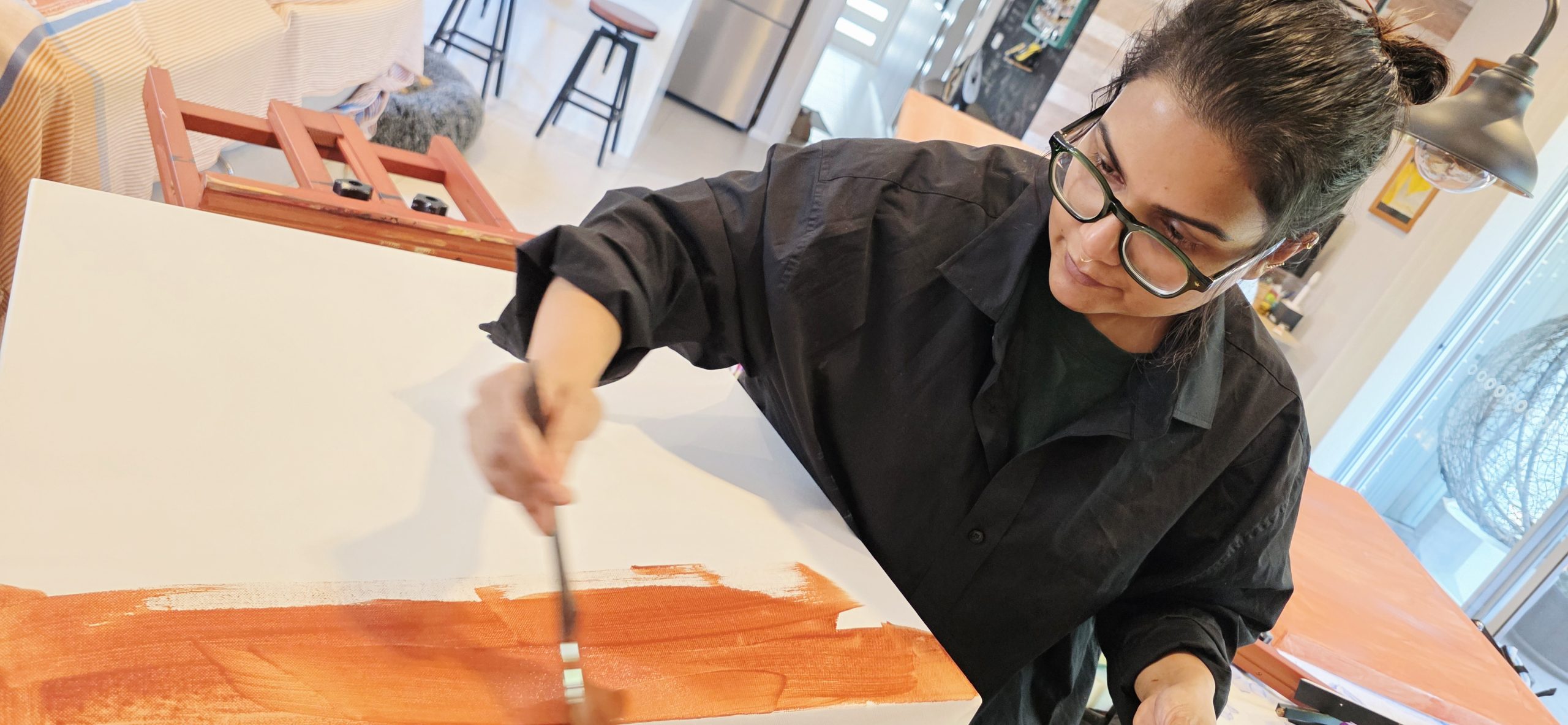
This exhibition reflects both a journey and a lifelong dream shared by a group of Bangladeshi individuals, expressed through the work of two artists from the group. It explores the ebb and flow of emotions, the push and pull of Mother Nature, and the innate beauty of the world gifted to us, beauty that words alone cannot express. The aim is to bring a small piece of the expedition back to our communities and to give back, in turn, to the communities that made this journey possible.

For these travelling companions, Everest Base Camp was more than a mere achievement or success. It was a window into their vulnerabilities and their resilience. Every step forward became a leap into self-exploration and awareness. As each breath carried less oxygen than the one before, the journey revealed the value of life and the bonds of humanity that keep us moving forward.

Most of all, the two artists, Sheikh Lana (Lana) and Fahmida Suma (Shoma), were humbled by the love, care, and generosity of the people of Nepal, particularly those who made it possible to reach Everest Base Camp. Through this project, Lana and Shoma seek to give back to the people who helped them navigate the mountain, persevere when the journey became difficult, and embrace both the beauty and the brutality of Mother Nature.

Lana and Shoma will donate proceeds from the sale of their artwork to support communities in the Himalayas through the Australian Himalayan Foundation.

The Australian Himalayan Foundation (AHF) is a not-for-profit organisation committed to empowering the people of the Himalaya through education, health and environmental initiatives across Nepal, Bhutan and Ladakh. AHF works in partnership with trusted local NGOs to improve the quality of life for those living in some of the most remote and vulnerable communities in the region.

AHF is a registered Australian NGO with no political or religious affiliations and has accreditation status with the Australian Government overseas aid program (DFAT).

The Performances
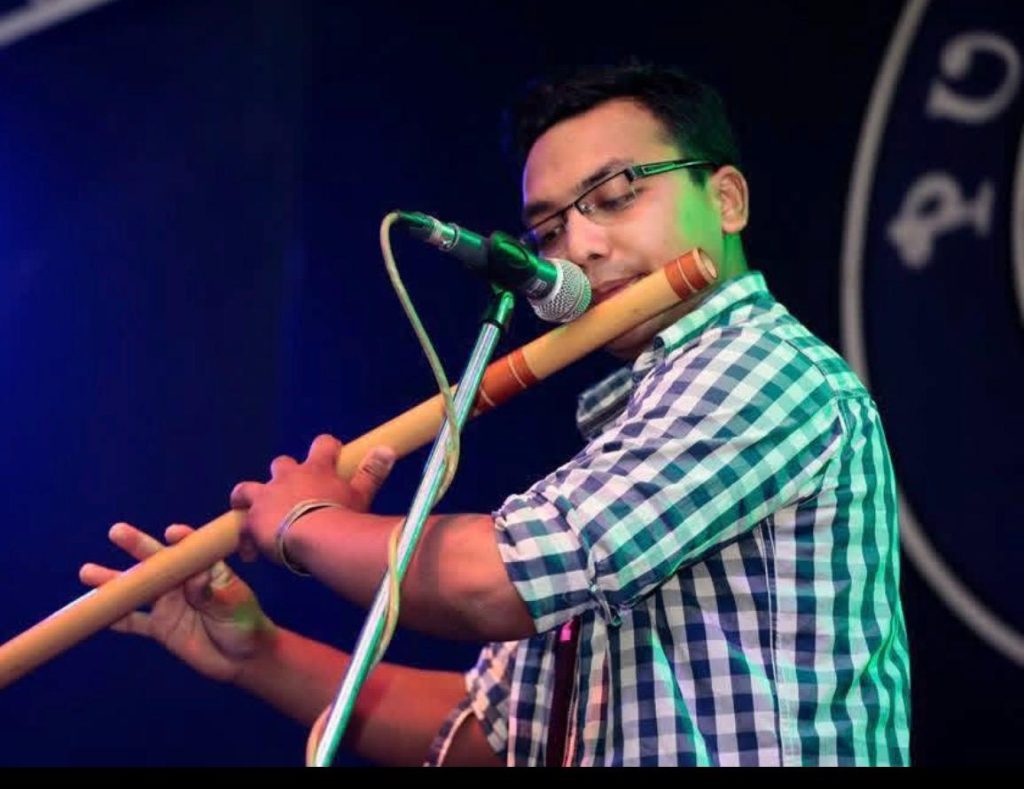
SAROJ MAHARJAN
Saroj Maharjan was born in Kathmandu, Nepal, into a Newa family where music and culture were an important part of community life. From a very young age, he had the opportunity to learn traditional musical instruments through the Guthi cultural system, which nurtures Newa heritage and arts. Saroj began playing music at the age of seven, developing his passion during his school years where music was a compulsory subject.
 
He received early musical guidance from renowned percussion maestro Nhuchhe Bahadur Dangol and learned flute from Dharma Munikar. Later, he advanced his flute studies under Rubin Shrestha, a respected flutist from the well-known Nepali instrumental band Kutumba. His musical journey also included teaching music in rural parts of Nepal, where he shared knowledge and passion for music even in areas without electricity.
 
Saroj further expanded his musical experience by performing with the Nepali rock band Anuprastha. In 2014, he also developed technical expertise by studying sound engineering at International Sound Service (ISS).
 
In 2015, Saroj migrated to Australia with his partner to pursue further education. Despite the move, his connection with music remained strong. He continued performing as a backup musician for visiting Nepali singers during concerts across Australia. In 2018–2019, he formed a band called Sataha Band and regularly performed at Chulo Nepalese Restaurant, a popular Nepali restaurant in Sydney.
 
Following the COVID-19 period, Saroj expanded his entrepreneurial journey by founding KTM Event Management in Canberra, providing comprehensive event services under one roof. Alongside his business ventures, he remains deeply committed to cultural preservation. He currently serves as the President of Guthi Canberra, where he helps organize and run Newa music training programs open to anyone interested in learning traditional music.

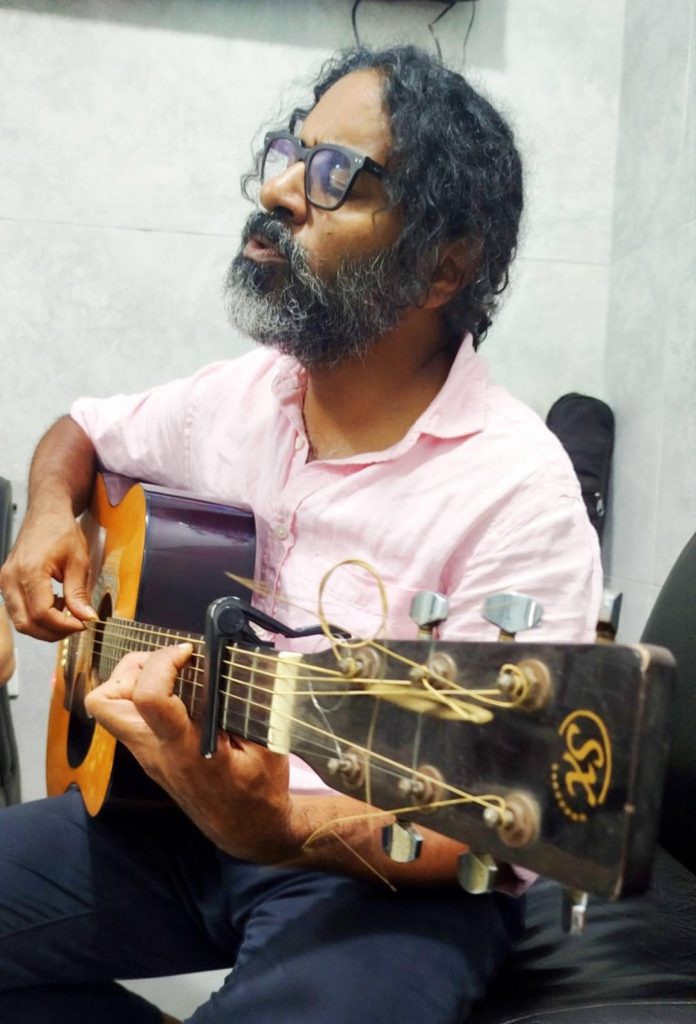
TARIQ YUSSOUF

Tariq Yussouf is a public servant by day, but at his core, he is a self-taught, ever-evolving musician shaped by a range of musical traditions from Bangladesh. For over three decades, he has been singing and playing along to timeless Bangla tunes of his choice, describing himself, with humility, as a “half-baked” musician still in the process of becoming.
 
His voice carries the weight of memory, land, and belonging. Music, in all its forms, has profoundly shaped his identity. Tariq has found his deepest connection in music, songs that speak not just to melody, but to meaning. For him, music is more than a genre; it is a living archive of people, place, and quiet resistance.
 
Tariq is drawn to music that reflects humanity and activism. His performances are grounded in stories of land and country, of roots that shape us and journeys that redefine us. Through his music, he seeks to communicate deep emotions with those he loves. His voice evokes both intimacy and vastness, echoing the same emotional terrain that defines the path to Everest Base Camp, reflection, resilience, and reverence for something greater than oneself.
 
At this exhibition, Tariq will bring these sensibilities to life through Bengali songs that honour connection, between people, between histories, and between the landscapes we carry within us.